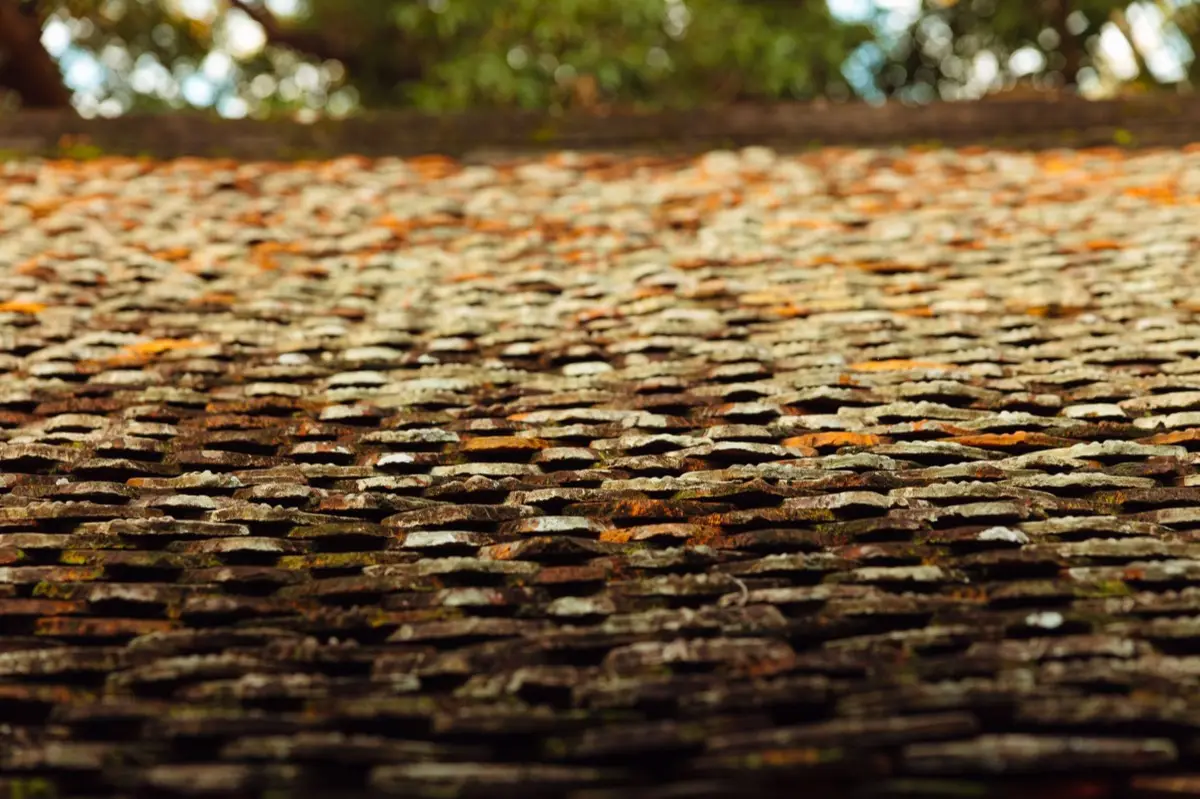
Rated life and actual life are different numbers, and ventilation explains most of the gap. A 30-year architectural shingle over a stagnant attic in a hot climate can be finished at 18. The same shingle over balanced intake and exhaust can beat its rating.
The rating on the wrapper is a laboratory number. Your roof did not grow up in a laboratory.
Expected service life by material
| Material | Commonly rated | What we actually see |
|---|---|---|
| Three-tab asphalt | 20–25 yrs | Often 15–20 |
| Architectural asphalt | 25–30 yrs | Often 20–28 |
| Impact-resistant Class 4 asphalt | 30 yrs | Similar, better hail survival |
| Exposed-fastener metal | 25–40 yrs | Fastener-limited, not panel-limited |
| Standing seam metal | 40–70 yrs | Flashing details fail first |
| Concrete or clay tile | 50+ yrs | Tile outlives its underlayment by decades |
| Wood shake | 25–40 yrs | Highly maintenance-dependent |
| Single-ply membrane, low slope | 20–30 yrs | Seam- and detail-limited |
| Sprayed foam with coating | Indefinite with recoats | Coating clock, not foam clock |
Two rows in that table deserve emphasis because they cause the most expensive surprises.
Tile. The tile lasts fifty years and the underlayment beneath it does not. A tile roof frequently needs a lift-and-relay long before a single tile has failed, which is a large bill that almost nobody has budgeted for. If you own a tile roof, the age of the underlayment is the number that matters.
Foam and coated low-slope. Ultraviolet exposure destroys the coating, not the foam. Recoat on schedule and the assembly effectively continues. Defer the recoat and the whole thing goes.
What actually decides where you land
Ventilation, first and by a distance. Intake at the soffit, exhaust at the ridge, roughly balanced. A shingle in a 150-degree attic loses the volatiles that keep asphalt flexible, and then it curls. If your soffit vents are packed with blown insulation, your roof is aging from the inside. That is what roof ventilation work is for and it is the single highest-return item on any roof.
Fastening. Nails placed above the nail line, or overdriven through the mat, produce a roof that blows off in a wind event a correct roof shrugs at. You cannot see this from the ground once the roof is on.
Orientation. South and west slopes cook. It is normal for one slope to be visibly older than another on the same house, and it is why roofs rarely fail all at once.
Trees. Shade slows ultraviolet damage and encourages moisture, moss and debris in valleys. Net effect is usually negative, mostly because of what collects rather than what grows.
Climate. Freeze-thaw cycling, hail frequency, coastal salt and relentless ultraviolet each subtract differently. A roof in a mild marine climate and a roof in a high-desert summer are not the same product after fifteen years.
Si quieres que revisemos la edad real de tu techo y te lo expliquemos en español, lo hacemos sin problema.
The signs, in the order they appear
Roofs give a long warning. Learn to read the sequence.
Granules in the gutters and at downspout outlets. Normal in small amounts after a new install. A steady accumulation on a mature roof means the mat is losing its shield.
Curling and cupping at the tab edges. The asphalt has stiffened. This is the classic mid-to-late signal.
Bald patches where the black mat shows through. Past this point, repairs get difficult because there is nothing sound to fasten into.
Exposed nail heads and tented shingles. Fasteners walking out from thermal cycling.
Sagging along a ridge or between rafters. Structural. Stop reading and call somebody.
A stain on a ceiling. Late, and by then water has been in the decking for a while.
Moss and dark streaking. Streaking is algae and it is mostly cosmetic. Thick moss holds moisture against the mat and lifts tabs, and it is worth removing gently, without a pressure washer, which strips granules faster than the weather does.
Extending a roof honestly
Some roofs can be stretched and it is a smart move when the failures are localized. Replace failed pipe boots, rebuild the one bad valley, correct the ventilation, keep the gutters clear, and get a written roof inspection every year with photographs so you are tracking a trend rather than reacting to a stain.
That approach genuinely buys years on a roof in its late teens with sound decking. It does not work on a roof with widespread granule loss, because at that stage you are fastening repairs into material that will not hold, and each patch is money spent on a surface that is leaving.
The one hard rule: if the decking is soft underfoot anywhere, the timeline is no longer yours. Soft sheathing means water has been sitting in it, and that spreads quietly under intact-looking shingles.
The California rules that change the arithmetic
Whether replacing early is cheaper depends partly on what your insurer and your state will and will not allow.
California ties every cancellation window to the day you sign, not to what your insurer decides - so a denial three weeks later leaves you with no statutory way out. You get three days normally, five if you are a senior citizen, and seven only where a disaster has actually been declared by the President, the Governor or your local executive officer. The notice must be twelve-point boldface, immediately next to where you sign.
What California allows on your deductible
If a carrier is paying for part of the roof, the deductible is the number that decides whether going early is cheaper at all.
California has no contractor-specific rule against a roofer eating your deductible, which is unusual for a big storm state - the section listing prohibited acts in home improvement contracts says nothing about it. That is not permission. A roofer who quietly covers your share while billing the carrier the full amount is assembling a false claim, and that is a crime under Penal Code section 550 for the roofer and for you.
When replacing early is the cheaper decision
If the age already puts you at the short end of the service-life table above, and you are also facing a repair bill of any size, spend the money once and get a roof replacement. A repair can only ever buy you the years the rest of the covering still has in it. Spending a full setup to add two more years to a roof with two years left is the arithmetic that wrecks a roofing budget.
The reverse is also true and we say it more often. A roof with a decade left and one failed detail needs the detail fixed, not replaced, and anyone quoting a full re-roof off a single ceiling stain has not been in your attic.
Bottom line
Expect architectural asphalt to give you 20 to 28 real years, longer with correct ventilation and shorter without it. Watch granules, curling and exposed mat in that order. Get an annual written inspection past year ten. Fix ventilation before you spend money on anything else, because it is the cheapest year you will ever add to a roof.
Ontario Roof Pros does written roof inspections with photographs, asphalt shingle roof repair, and full roof replacement across Ontario and the Inland Empire and the eastern San Gabriel Valley. Call (866) 875-9250 for a real remaining-life estimate, including the answer that you have years left.
Ready for a free quote in Ontario?
Ontario Roof Pros — free estimate, clear scope, no pressure. Use the form on this page or jump to the homepage quote.
Related services in Ontario
Ontario Roof Pros money pages — go straight to the service you need.
- Roof Replacement →
Replacement here comes down to one question: can the building keep working while the roof comes off? On a distribution building that answer drives the whole sequence, and on a house it decides how long the framing sits open to the sky.
- Roof Inspections & Moisture Surveys →
A warehouse roof is an asset with a service life. The buildings that get twenty-five years from a membrane are the ones looked at twice a year, and the ones that get twelve are the ones nobody visited between leaks.
- Asphalt Shingle Roofs →
Shingles cover most houses in this city, and the mistake we correct most often is shingles installed somewhere they do not belong: a low-pitched addition, a patio tie-in, a converted porch with barely any fall across it at all. Below four in twelve, shingles need doubled underlayment.
- Roof Leak Repair →
A leak almost never drips where it entered. Water lands on the sheathing, runs down the top of a rafter or a truss chord and falls where something finally stops it, so the stain on a bedroom ceiling can sit ten or fifteen feet from the actual break in the roof above it.
- Storm Damage Restoration →
The storms that hurt roofs in this valley are the winter atmospheric rivers, and on a low-slope roof the damage is usually not the wind at all. It is the water that could not leave the roof fast enough.
Frequently asked questions
How long does an asphalt shingle roof last?
Three-tab shingles are commonly rated 20 to 25 years and architectural shingles 25 to 30. Real-world service life usually lands below the rating, because the rating assumes correct ventilation, correct fastening and a moderate climate. A well-ventilated architectural roof in a mild climate can beat its rating. A poorly ventilated one in relentless heat can lose a third of it.
What shortens a roof's life the most?
Attic ventilation, by a wide margin. A shingle cooks from underneath in a stagnant attic and the asphalt loses volatiles faster, which is what makes tabs curl and granules release. Second is fastening errors, usually nails driven high above the nail line or overdriven through the mat. Both are installation decisions, which is why two identical roofs on the same street can age a decade apart.
Does a dark roof wear out faster?
A dark surface runs hotter, and heat is what ages asphalt, so directionally yes. In practice the effect is smaller than ventilation and it is smaller than orientation. The south and west slopes on any house wear visibly faster than the north slope regardless of color, which is why a roof rarely fails evenly and why partial-slope replacement is a real conversation.
Can I get another five years out of my roof?
Sometimes, and it is a legitimate strategy. If the failures are localized and the decking is sound, targeted repairs plus fixing the ventilation can genuinely buy years. What does not work is patching a roof that has widespread granule loss and exposed mat, because at that stage every repair is being fastened into material that no longer holds a nail well.
Should I replace a roof before selling the house?
It depends on how it inspects. A roof with clear remaining life and a written inspection report is a fine thing to hand a buyer. A roof at the end of its life will come up in inspection and be negotiated at a number you do not control, usually higher than what you would have paid to do it yourself. In between, get the inspection in writing and let it decide.
How often should a roof be inspected?
Once a year past the ten-year mark, and after any significant wind or hail event regardless of age. The point of an annual look is that a failing pipe boot or a lifted flashing costs very little to fix and a great deal to ignore, because water in the decking is what converts a repair into a replacement.
Local context
How this applies in Ontario, CA
Every article here is written from roofing work done in Ontario and the Inland Empire and the eastern San Gabriel Valley, so the numbers reflect local labour, permit and material costs rather than a national average. Your own job can land either side of them depending on access, the condition of what is already there, and the materials you pick — tapered polyisocyanurate built to a quarter-inch-per-foot fall, hot-air-welded PVC with a KEE plasticizer, tested ANSI/SPRI ES-1 edge metal and coping.
The way to turn any of this into a real answer is to have someone look at your actual situation. The free estimate is free, itemized and written down, with no deposit and no obligation. Call (866) 875-9250 or start on the Ontario Roof Pros homepage.
Areas Ontario Roof Pros covers
Ontario first, then the surrounding communities of the Inland Empire and the eastern San Gabriel Valley. Each has its own page with local detail rather than a copy of this one:
- Chino, CA — San Bernardino County, population 91,403
- Chino Hills, CA — San Bernardino County, population 78,411
- Montclair, CA — San Bernardino County, population 37,865
- Upland, CA — San Bernardino County, population 79,040
- Rialto, CA — San Bernardino County, population 104,026
- Colton, CA — San Bernardino County, population 53,909
Or jump to the full list of Ontario services.
More from the Ontario Roof Pros blog
- Does Insurance Cover Roof Replacement in Ontario, CA?
Insurance pays for sudden storm damage, not for a worn-out roof. Here's how adjusters actually decide, and what ACV settlement means for Ontario, CA homeowners.
- Will Home Insurance Cover a Roof Leak in Ontario, CA?
The leak is not what gets decided. The cause is.
- What Is a Soffit? The Board Under Your Ontario, CA Eaves
Soffit is the underside of the overhang, fascia is the board on its edge. Why vented soffit is the intake half of a Ontario, CA attic, and how both boards fail.
The Ontario Roof Pros Team
roofing specialists serving Ontario, CA
Written by the Ontario Roof Pros team — insured roofing pros serving Ontario, CA and the surrounding area.